

SAAS industry has seen a steady decline in revenue growth rates over the years. Figure 1 shows the average revenue growth rates (in percentage) for 10 sample SAAS companies from 2015 to 2025. I pulled this data from public company filings. The revenue growth trendline is sloping downward quite steeply.
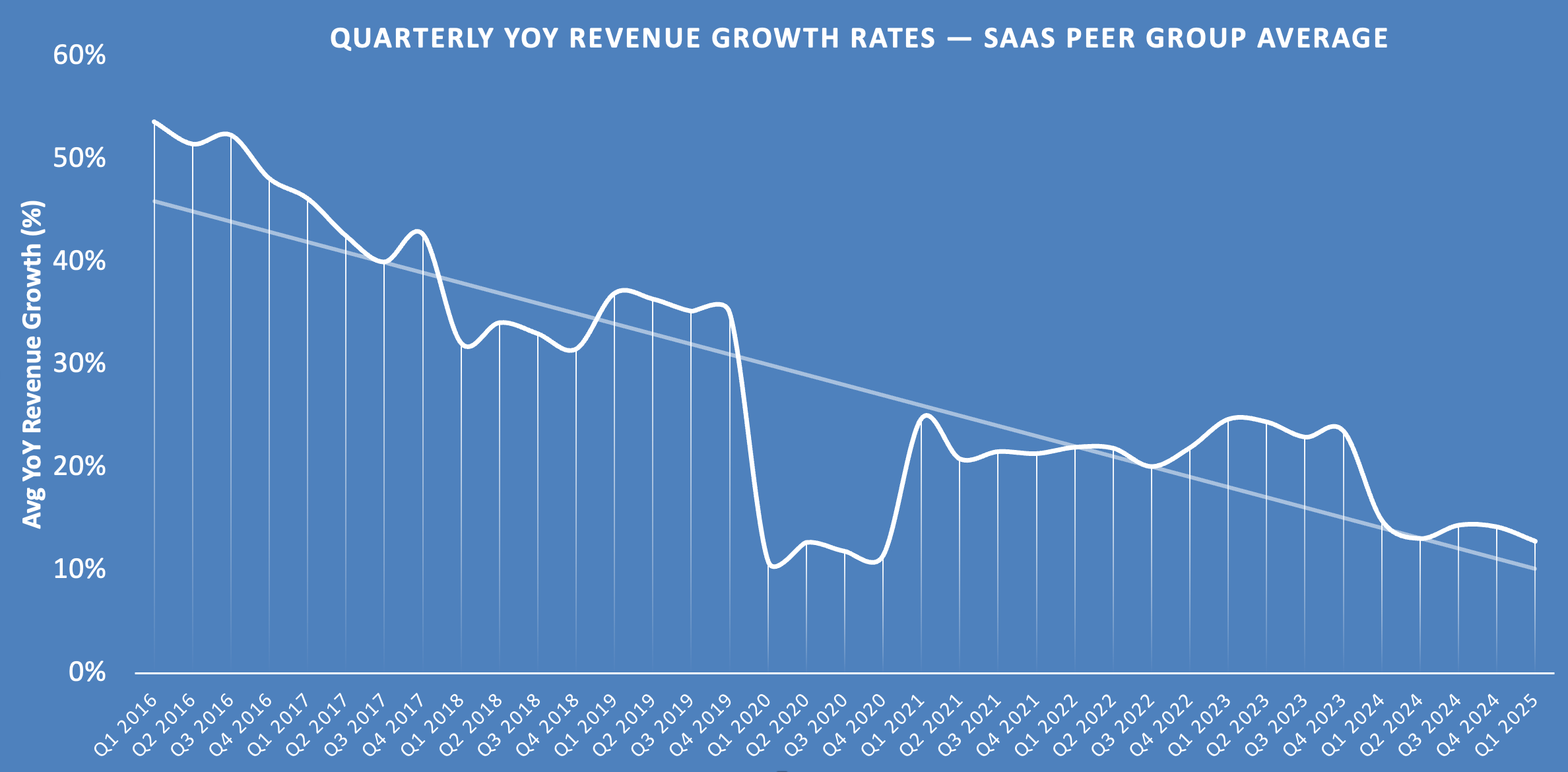
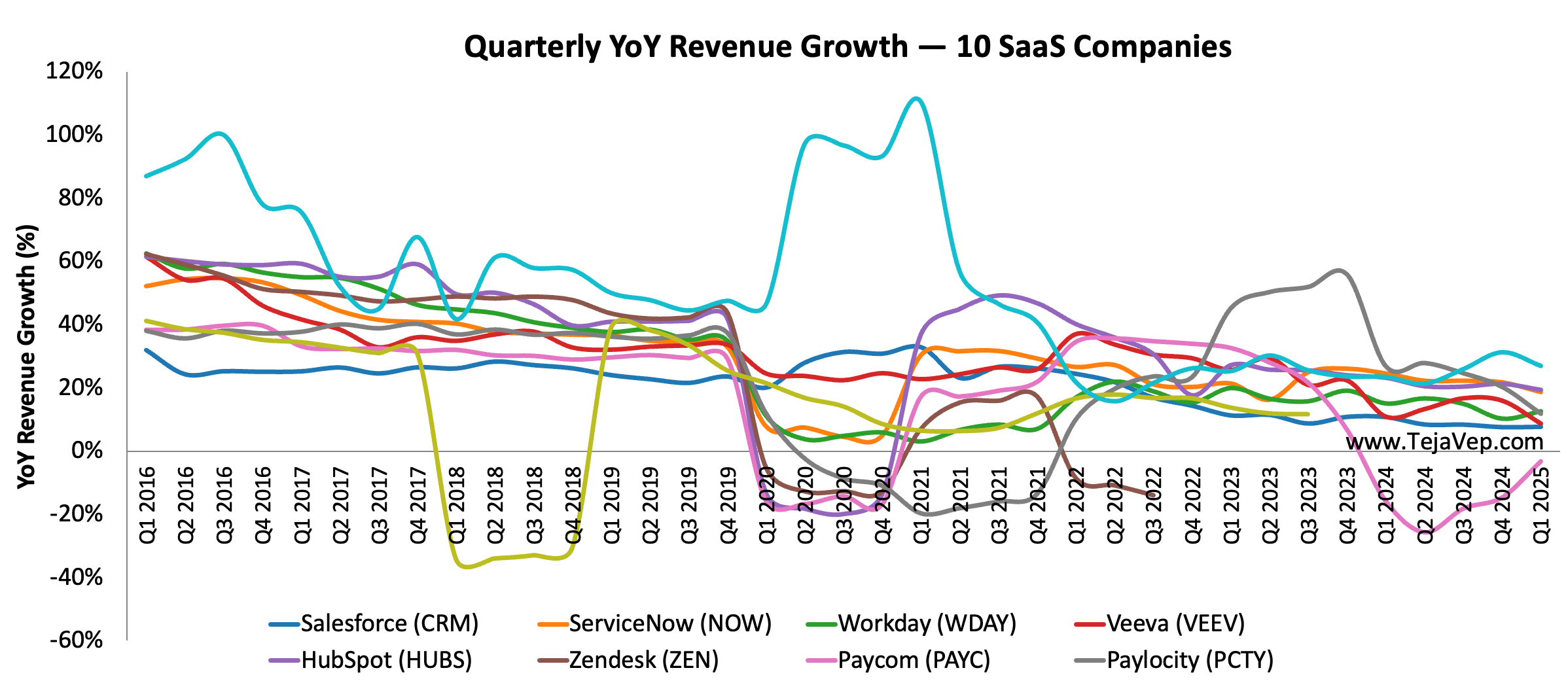
Figure 2 shows the revenue growth rate for all of these companies individually over this 10 year period (in case you are curious). As you can see, there are hardly any outliers - and I selected these companies randomly.
Why is this happening? Has the SAAS industry reached the maturity stage in the Product Lifecycle curve? What can SAAS companies do about this? This will be the topic of discussion in this blog (written by me without AI).
Why SAAS growth is slowing down
There are multiple reasons for SAAS revenue growth rates slowing down:
Post COVID normalization
COVID pulled forward 3 to 5 years of demand as massive digitization led to inflated growth during 2020 to 2020. Due to the pull forward effect, growth naturally compresses in the future years.
Rising Interest Rates
Rising interest rates bring down the current value of the future cash flows from SAAS companies. The valuation of a SAAS company is a combination of the value of its current earnings plus future earnings. Future earnings are discounted by interest rates. So higher interest rate means the future earnings are worth much less today. Hence when interest rates rise, SAAS stocks fall. But how does this explain the fall in revenue growth for SAAS? This is explained in the following section.
Enterprise SAAS spending discipline
Rising interest rate lowers stock and enterprise value. This puts pressure on spending. Hence companies cut back on SAAS software spend lowering the revenue growth for SAAS companies. The number of SAAS software subscriptions in companies has come down from a peak of 130 applications in 2022 to an average of 106 applications globally today. Multiple vendors are being consolidated. For example, my own organization replaced Calendly with Google Calendar when Google came up with meeting booking feature for clients, similar to Calendly.
AI redistributing spend
This is one of the strongest trends in 2026 -massive IT budgets are being allocated for tools like Anthropic and OpenAI. This means smaller share of the wallet for SAAS tools. Also, if you can ask ChatGPT to generate an image, maybe you don’t need that premium Stock photo subscription or subscription to creative tools like Canva or Adobe. While professionals will continue to need SAAS tools, the regular Enterprise employee may be restricted from purchasing such tools. Some smaller companies have already cut their traditional SAAS spend by 8% while allocating massive budgets for AI tools.
Market Maturity
As explained in the Product/Industry Lifecycle curve, every industry and product goes through three phases: Introduction, Growth and Maturity in the form of an S-curve. This is consistent with Diffusion of innovations theory, first published in 1962 by Everett Rogers. SAAS valuations peaked in 2015 and have been on a decline ever since. So SAAS industry is well and truly in the maturity phase.
What companies can do about SAAS slowdown
Bundling strategy
Low demand leads to pricing pressure. Lower prices for individual point products makes it hard to cover customer acquisition costs. Hence SAAS companies that bundle multiple products (like Adobe Creative Cloud, or Rippling) have an advantage. They can offer each product in the bundle at a low price while still charging a viable price for the whole bundle.
Vendor consolidation by enterprise customers also means that bundling works in favor of SAAS vendors (Eg: A company having Microsoft Office subscription may switch to Teams and stop their Zoom subscription).
Not all bundling strategies work. You need to know the economics of bundling, for this. I will cover this in a future post.
Global expansion
While the US SAAS industry maybe in maturity phase, in many other countries like India and South America, SAAS is still in the growth phase. Many companies like Canva are already taking advantage of international expansion in these markets to fuel their growth.
If your SAAS product is self-serve, you get to increase your revenue stream by simply focusing on basic localization for a new target geography. This will entail local currency payment validation, automated language translation and SEO optimization for the target country.
Price to value
The days of basing SAAS pricing on per employee per month are gone. Usage based pricing and outcome based pricing are the new norms in SAAS.
Specialized, targeted products
As discussed in the Product Strategy primer, as an industry matures, products need to get specialized to cater to the target segment. Many companies have multiple versions of the same product suitable for different user segments. For example, ADP has multiple HCM products each catering for small business, mid-market and enterprise respectively.
About the author
Teja Vepakomma is a Product Strategy and Growth consultant to companies. He has couple of decades of experience working in Product Management leadership roles in Global SAAS companies. He’s currently based in Bangalore, India. You can follow or reach out to him on LinkedIn. No AI has been used in this blog. Comment below to share your views.